Care and repair
What wears out in a home audio system, and when
Styli, foam surrounds, electrolytic capacitors and firmware support all have a clock on them. Here is how to schedule each one instead of waiting for failure.

Nothing in a hi-fi fails randomly. Styli wear by hours played, foam speaker surrounds perish by years in the air, electrolytic capacitors dry out with heat and time, and connected equipment stops working when its software support ends. All four have clocks you can read.
This guide turns each clock into an interval and a cost per year, using the consumable interval calculator's arithmetic: replacements per year is 365 divided by the interval in days, and the yearly cost is that figure multiplied by the unit price.
The stylus is the only part you can wear out by listening
Take the rated life from your own cartridge's documentation rather than from a forum figure, since diamond profiles differ by a factor of three. Then divide by your listening hours. A cartridge specified at 1,000 hours, played 5 hours a week, is 200 weeks — about 3 years and 10 months. At 15 hours a week, the same stylus is gone in about 67 weeks, which is 1 year and 3 months.
A $90 replacement stylus on the first pattern is roughly $23 a year. On the second it is about $70 a year. Neither is large; what makes stylus wear expensive is ignoring it, because a worn tip cuts the groove walls rather than following them, and the records are not replaceable at $90 each.
Two things shorten the interval regardless of hours. Tracking force set below the cartridge's specified range lets the tip skate rather than sit, and dust acts as an abrasive between diamond and vinyl. A carbon brush before each side and a stylus brush after it costs about $25 once and removes most of both problems.
| Listening hours per week | Weeks per stylus | Roughly | Cost per year |
|---|---|---|---|
| 5 hours | 200 weeks | 3 years 10 months | about $23 |
| 10 hours | 100 weeks | 1 year 11 months | about $47 |
| 15 hours | 67 weeks | 1 year 3 months | about $70 |
Weeks per stylus is 1,000 divided by the weekly hours. Cost per year is $90 divided by the number of years each interval represents. Use the rating printed in your own cartridge's documentation; profiles vary widely.
The parts that age whether or not you use them
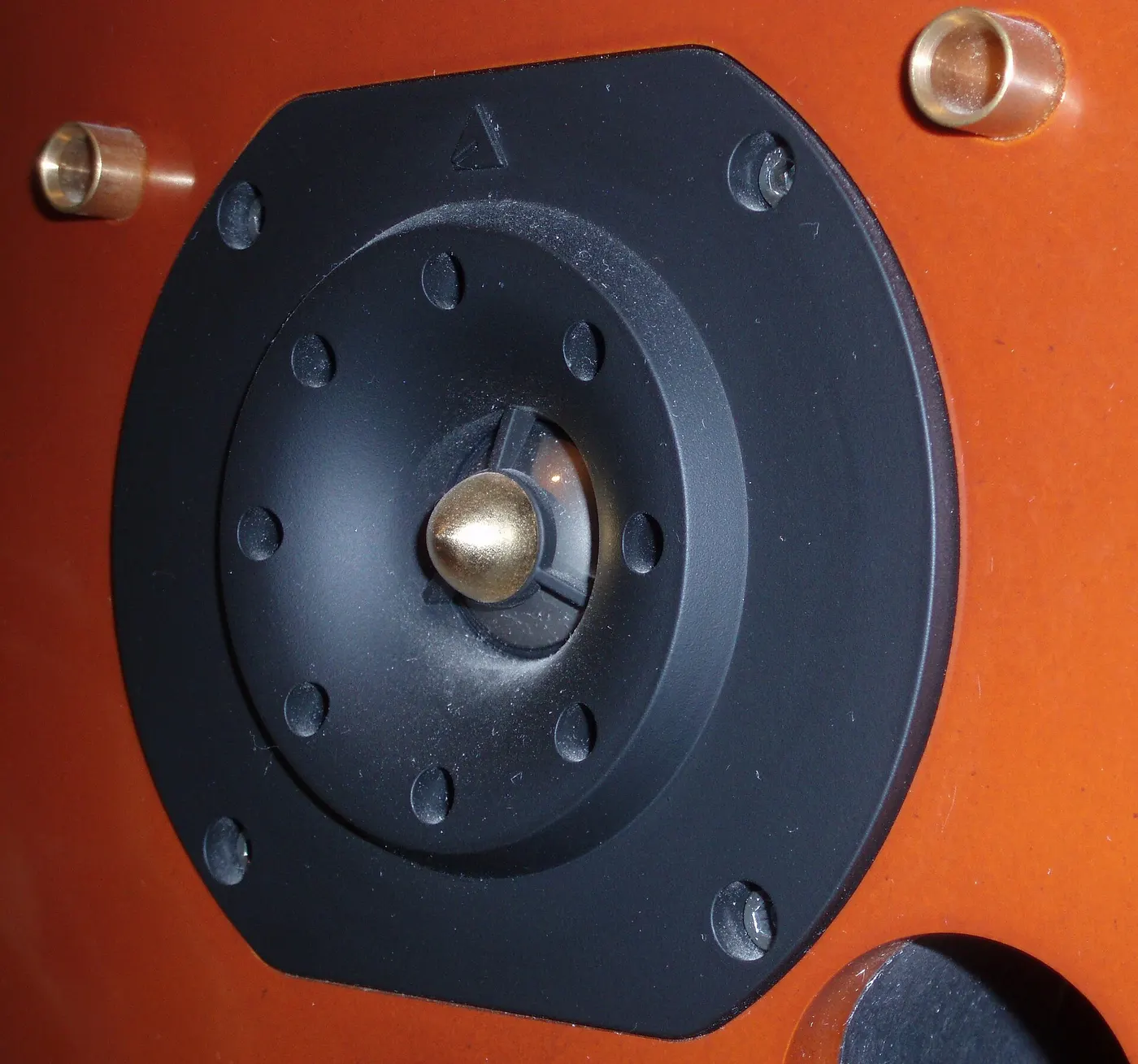
Foam speaker surrounds perish by exposure, not by playing. A foam surround commonly reaches the end of its life somewhere between 10 and 20 years depending on humidity, ultraviolet light and air quality, and it fails the same way every time: the ring crumbles at the edge and the driver starts to rattle at low frequencies. Re-foaming kits are a common repair and typically cost far less than a replacement driver.
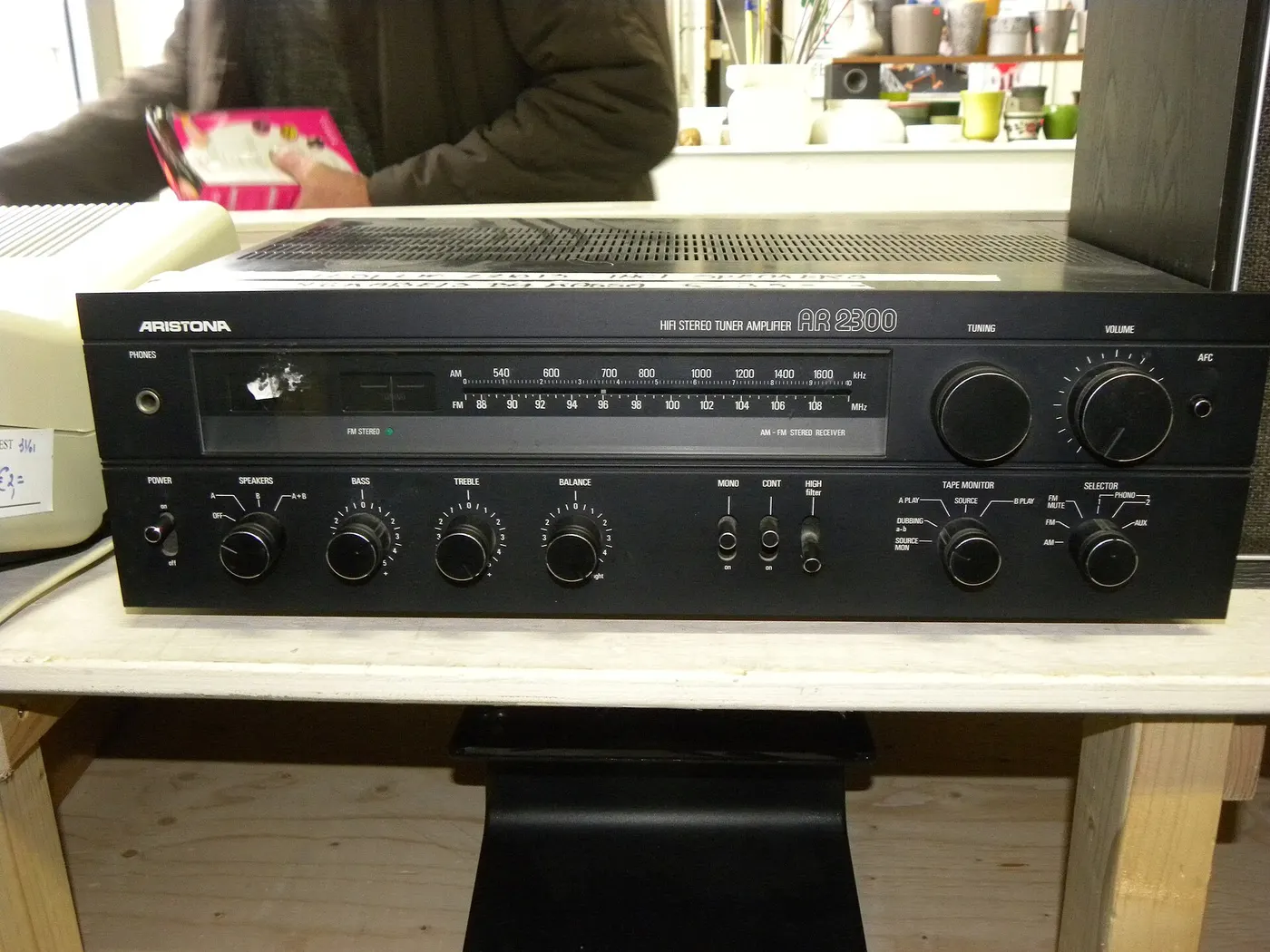
Electrolytic capacitors in an amplifier dry out with heat and time. The practical signals are hum that was not there before, a channel that comes up slowly from cold, or a unit that smells warm. On a vintage amplifier, a recap is a known service item rather than a disaster, and it is the main reason a 40-year-old integrated amplifier can still be a reasonable purchase.
Rubber drive belts in belt-drive turntables are the cheapest of the three. A belt that has gone slack produces slow or unstable speed, and replacements are usually between $15 and $30. Checking speed against a strobe disc once a year catches it before it becomes audible on sustained piano notes.
| Part | Clock it runs on | Typical interval | First symptom |
|---|---|---|---|
| Stylus | Hours played | 1,000 hours, per the rating | Sibilance and groove noise increase |
| Foam surround | Years exposed to air | 10 to 20 years | Rattle or buzz at low frequencies |
| Electrolytic capacitors | Years plus heat | 20 to 40 years | Hum, or a channel slow from cold |
| Drive belt | Years plus tension | 3 to 7 years | Speed drifts or wavers |
These are planning ranges drawn from how each material ages, not measurements of a particular product, and a unit kept in a hot cabinet will sit at the short end of every row.
The clock nobody prints on the box: software support
Anything in the rack that connects to a network has a support window, and in most cases the manufacturer does not tell you what it is. Federal Trade Commission staff looked for that information on 184 connected products and found that nearly 89% failed to disclose on their websites how long the products would receive software updates; 161 of the 184 gave no support duration or end date on the manufacturer's product pages, and a basic internet search did not turn it up for about two thirds — 124 — of the devices.
For an audio system this is the difference between a 20-year amplifier and a 5-year streamer. A passive speaker has no support window at all. A streaming receiver whose app is withdrawn loses the function it was bought for while every other part of it still works, and that is a depreciation event as well as an annoyance.
The FTC's own consumer advice is to look for the support duration on the product or manufacturer's website before buying and, if it is not there, to ask the manufacturer directly by phone, email or chat. The staff paper also notes that failing to inform buyers about update duration on products sold with written warranties may implicate the Magnuson Moss Warranty Act, which covers consumer products costing more than $15.
- 184 connected products were surveyed by FTC staff; nearly 89% did not disclose their software support duration
- 161 of those products gave no support information at all on the manufacturer's product pages
- A basic internet search found nothing for 124 of them
- Written-warranty disclosure duties under the Magnuson Moss Warranty Act apply to consumer products costing more than $15
- A passive speaker has no support window; a networked source has one whether or not it is published
A maintenance year that costs about an hour
Once a year, do five things. Check turntable speed against a strobe disc. Set tracking force with a scale rather than by the counterweight markings. Re-seat every connector, because oxidised contacts produce intermittent faults that look like component failure. Vacuum the dust from the amplifier's ventilation slots with the unit unplugged. And log the hours you have put on the stylus so the next replacement is a date rather than a surprise.
On the figures above, scheduled maintenance for a record-playing system is roughly $23 a year of stylus at 5 hours a week, plus a belt every 5 years at about $20, which is $4 a year. That is about $27 a year of consumables against the roughly $24 a year the electricity costs, and both are small next to depreciation.
The exception is the connected box. Put the model's support status in the same annual check, because the year it stops being updated is the year to decide whether it stays in the rack or is sold while it still has a working app.
Before you buy
- Find the hour rating in your cartridge's own documentation and log playing hours against it
- Set tracking force with a stylus scale at least once a year
- Check turntable speed with a strobe disc and replace a slack belt before it becomes audible
- Inspect foam surrounds for crumbling at the edge on any speaker over 10 years old
- Vacuum ventilation slots with the amplifier unplugged and keep it out of a sealed cabinet
- Re-seat every signal and speaker connection once a year
- Ask the manufacturer for the software support end date of any networked unit before you buy it
Questions readers ask
- How do I know a stylus is worn without a microscope?
- Listen for sibilance that was not there before, a rise in groove noise on quiet passages, and mistracking on loud inner-groove passages. Those arrive in that order. A 1,000-hour rating played 5 hours a week gives about 200 weeks, so logging your hours gives you a date before any of those symptoms do.
- Is re-foaming a speaker worth doing?
- It is when the cone and voice coil are intact and the driver is no longer made, which describes most speakers in the 10-to-20-year window where foam fails. The repair restores the mechanical suspension that the surround provides. Where it is not worth it is on a speaker whose replacement drivers are still sold for less than the kit plus your time.
- Should I leave the amplifier on all the time to avoid thermal cycling?
- The cost side is clear: running 90 W for 12 hours a day rather than 4 takes annual electricity from about $24 to roughly $68. Capacitors also age faster at higher temperatures, so continuous heat works against the component most likely to need replacing. Switching off when the room is empty costs nothing and helps both.
- How long should I expect firmware updates to continue?
- There is usually no published answer, which is the finding itself: FTC staff found nearly 89% of 184 surveyed connected products did not disclose it. Ask the manufacturer before buying, and treat an unanswered question as a reason to prefer the passive version of the same function where one exists.
- Do connectors really need re-seating?
- Yes, and it takes ten minutes. Oxide builds on exposed copper and nickel contacts and raises resistance at the joint, which shows up as a channel that drops out when the rack is nudged. Unplugging and re-plugging each connection scrapes the oxide away mechanically, which is why the fault often disappears without any part being replaced.
Sources
- Federal Trade Commission — staff survey of 184 smart products: nearly 89% did not disclose software support duration — checked 2026-11-03
- FTC consumer alert — how long will your smart device get software updates, and what to ask before buying — checked 2026-11-03
- ENERGY STAR — certified speakers and sound bars: AV equipment with the label uses up to 70% less energy — checked 2026-11-03
Some links on this site can earn us a commission. That does not change which product a guide recommends, and it adds nothing to your price. Advertising is not enabled on this site yet. When it is, ads will be labelled and kept visually separate from the guides.